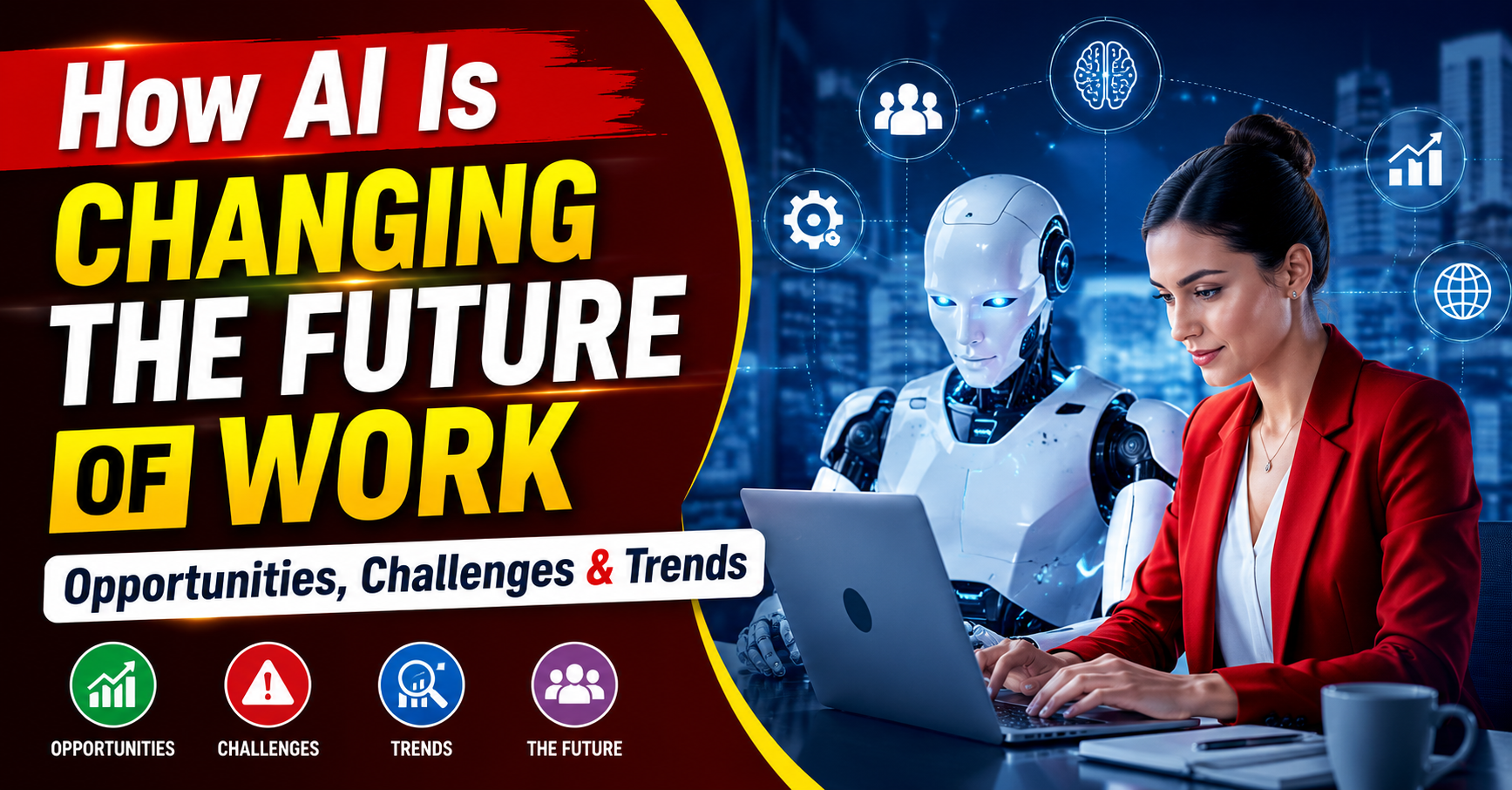
Artificial Intelligence (AI) is no longer a technology of the future. It is already changing the way people work, communicate, and do business. From small companies to global organizations, AI is helping businesses improve productivity, save time, and make better decisions. As technology continues to evolve, the impact of AI on the future of work is becoming more visible in every industry.
Today, AI is being used to automate repetitive tasks, analyze large amounts of data, improve customer service, and support employees in their daily work. While some people worry that AI will replace jobs, many experts believe it will create new opportunities and transform existing roles rather than eliminate them completely.
Understanding AI in the Workplace
AI refers to computer systems that can perform tasks that normally require human intelligence. These tasks include learning, problem-solving, language understanding, decision-making, and pattern recognition.
In modern workplaces, AI tools are becoming part of everyday operations. Employees use AI-powered software for writing, research, customer support, data analysis, scheduling, and much more.
Some common examples include:
- AI chatbots for customer service
- Virtual assistants for scheduling meetings
- AI-powered analytics tools
- Automated data entry systems
- Content creation and marketing tools
These technologies help businesses work faster and more efficiently.
How AI Is Transforming Different Industries
Healthcare
AI is helping healthcare professionals diagnose diseases, analyze medical records, and improve patient care. Hospitals use AI systems to identify health risks and assist doctors in making informed decisions.
Benefits include:
- Faster diagnosis
- Improved patient outcomes
- Reduced administrative workload
- Better resource management
Finance
The finance industry uses AI for fraud detection, risk assessment, and customer support. Banks and financial institutions rely on AI to process large amounts of data quickly and accurately.
AI applications in finance include:
- Automated trading systems
- Credit scoring
- Fraud prevention
- Financial forecasting
Education
Educational institutions are adopting AI-powered learning platforms to personalize student experiences. Teachers can use AI tools to create lesson plans, grade assignments, and track student progress.
Key advantages include:
- Personalized learning
- Faster feedback
- Better student engagement
- Improved educational outcomes
Retail and E-commerce
Retail businesses use AI to understand customer behavior and improve shopping experiences.
Examples include:
- Product recommendations
- Inventory management
- Customer support chatbots
- Demand forecasting
These solutions help companies increase sales while improving customer satisfaction.
AI and Job Automation
One of the most discussed topics regarding AI is job automation. AI can automate repetitive and rule-based tasks that traditionally require human effort.
Examples of automated tasks include:
- Data entry
- Appointment scheduling
- Basic customer support
- Invoice processing
- Report generation
This automation allows employees to focus on higher-value activities that require creativity, strategic thinking, and emotional intelligence.
However, automation does not necessarily mean job loss. Instead, many jobs are evolving. Workers are learning new skills and taking on more complex responsibilities alongside AI systems.
New Job Opportunities Created by AI
As AI technology grows, it is creating entirely new career paths. Businesses need professionals who can develop, manage, and improve AI systems.
Some emerging AI-related careers include:
| Job Role | Description |
|---|---|
| AI Engineer | Builds and develops AI systems |
| Machine Learning Specialist | Creates learning algorithms |
| Data Scientist | Analyzes and interprets data |
| AI Consultant | Helps businesses adopt AI solutions |
| Prompt Engineer | Designs effective AI instructions |
| AI Ethics Specialist | Ensures responsible AI use |
These roles demonstrate that AI is not only replacing certain tasks but also creating demand for new skills and professions.
The Skills Needed in an AI-Driven Future
As workplaces continue adopting AI, employees must adapt to changing requirements. Technical knowledge is valuable, but human skills remain equally important.
Technical Skills
Workers can benefit from learning:
- Data analysis
- AI tools and platforms
- Digital literacy
- Programming basics
- Cybersecurity awareness
Human Skills
Many skills cannot easily be replaced by AI.
These include:
- Creativity
- Critical thinking
- Leadership
- Communication
- Emotional intelligence
- Problem-solving
The combination of technical and human skills will become increasingly valuable in the future workplace.
Benefits of AI for Businesses
AI offers numerous advantages for organizations of all sizes.
Increased Productivity
AI can perform repetitive tasks faster than humans, allowing employees to focus on more meaningful work.
Better Decision-Making
AI systems analyze large datasets and provide insights that help businesses make informed decisions.
Cost Savings
Automation reduces operational costs by improving efficiency and minimizing errors.
Improved Customer Experience
AI-powered chatbots and recommendation systems help businesses provide faster and more personalized services.
Enhanced Innovation
By handling routine work, AI gives employees more time to focus on creativity and innovation.
Challenges of AI in the Workplace
Despite its advantages, AI also presents several challenges.
Job Displacement Concerns
Some workers fear losing their jobs due to automation. Businesses must provide training and reskilling opportunities to help employees transition into new roles.
Data Privacy Issues
AI systems often require access to large amounts of data. Organizations must ensure proper security and privacy protections.
Ethical Considerations
AI decisions can sometimes be biased if the training data contains inaccuracies. Companies need clear guidelines and responsible AI practices.
Skill Gaps
Many organizations struggle to find workers with the necessary AI-related skills. Continuous learning will be essential for future success.
The Future Relationship Between Humans and AI
The future of work will likely involve collaboration between humans and AI rather than competition. AI excels at processing data and performing repetitive tasks, while humans bring creativity, empathy, and strategic thinking.
Successful organizations will use AI as a tool that enhances human capabilities instead of replacing them.
In many workplaces, AI will function as a digital assistant, helping employees complete tasks more efficiently. Workers who embrace technology and continue learning will be well-positioned for future opportunities.
Preparing for an AI-Powered Future
Individuals and businesses can take several steps to prepare for the changing workplace.
For Employees
- Learn new digital skills
- Stay updated on AI developments
- Focus on creativity and problem-solving
- Participate in training programs
- Develop adaptability and flexibility
For Businesses
- Invest in employee training
- Implement AI responsibly
- Create clear AI policies
- Encourage continuous learning
- Balance automation with human expertise
Organizations that prepare today will have a competitive advantage in the future.
FAQs About AI and the Future of Work
Will AI replace all jobs?
No. AI will automate certain tasks, but most experts believe it will transform jobs rather than eliminate all of them. Many new roles will emerge as AI adoption grows.
Which industries will be most affected by AI?
Healthcare, finance, retail, education, manufacturing, and customer service are among the industries experiencing significant AI-driven changes.
What skills are important in an AI-powered workplace?
Critical thinking, creativity, communication, leadership, emotional intelligence, and digital literacy are highly valuable skills.
Is AI beneficial for small businesses?
Yes. AI can help small businesses automate tasks, improve customer service, reduce costs, and increase productivity.
How can workers prepare for the future of AI?
Workers can prepare by learning new technologies, improving digital skills, and developing uniquely human abilities such as creativity and problem-solving.
Conclusion
AI is reshaping the future of work in remarkable ways. It is improving productivity, creating new opportunities, and transforming industries around the world. While challenges such as job displacement and ethical concerns exist, the overall impact of AI is expected to be positive when implemented responsibly.
The future workplace will not be about humans versus AI. Instead, it will be about humans and AI working together to achieve better results. Those who embrace learning, adaptability, and innovation will be best prepared to succeed in this rapidly evolving digital era.